Home Blog Page 153

Agent Provide Update On Boniface’s Future At Leverkusen Following Appointment Of Erik Ten Hag

0

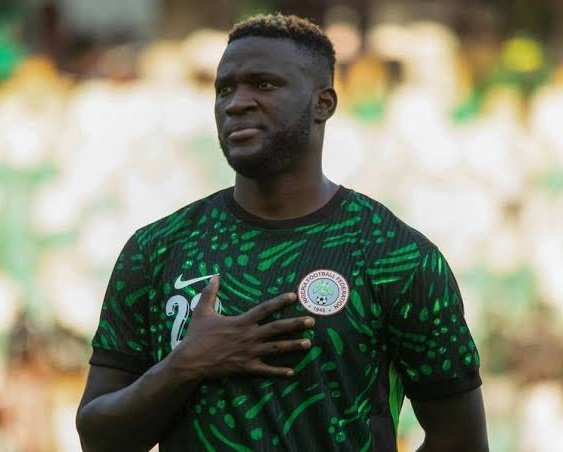
The agent of Nigeria international forward Victor Boniface has provided an update on his future at Bayer Leverkusen following the appointment of Erik Ten Hag as the new coach of the team.

Ten Hag replaced Xabi Alonso who left for Real Madrid and his departure has led to talks of an exit for Boniface, who was among the his first signings when he took over as coach and was key to the team winning the league and Cup two seasons ago by staying unbeaten all through their domestic games.

Although Alonso was at the helm when he had a failed transfer to Al-Nassr of Saudi Arabia in January, the coach was however quick to bring him back into the fold after the entire drama ended up with his staying.

Reports say he is still the most likeliest to leave after the exit of Florian Wirtz who joined Liverpool for a club record deal. Boniface is seen as someone who is surplus to requirements after losing his spot in the final games of last season, and Atta Aneke sort to clear the air on his client’s future.

“Victor ended the season after his trip to the national team. He is now on holiday, will train hard during his holiday and then come back for pre-season training.

“There is a new coach, a new constellation, but still a very good team that is playing in the Champions League again. Victor and I have never discussed a transfer. We have not spoken to any other club. At the moment, there are no plans to leave Leverkusen. Of course, you never know in football, but Victor loves playing for Leverkusen”, he was quoted as saying by German publication Bild.

Daniel Martins

Chelle Acknowledge Players Born Abroad Who Are Keen On Playing For Super Eagles

0

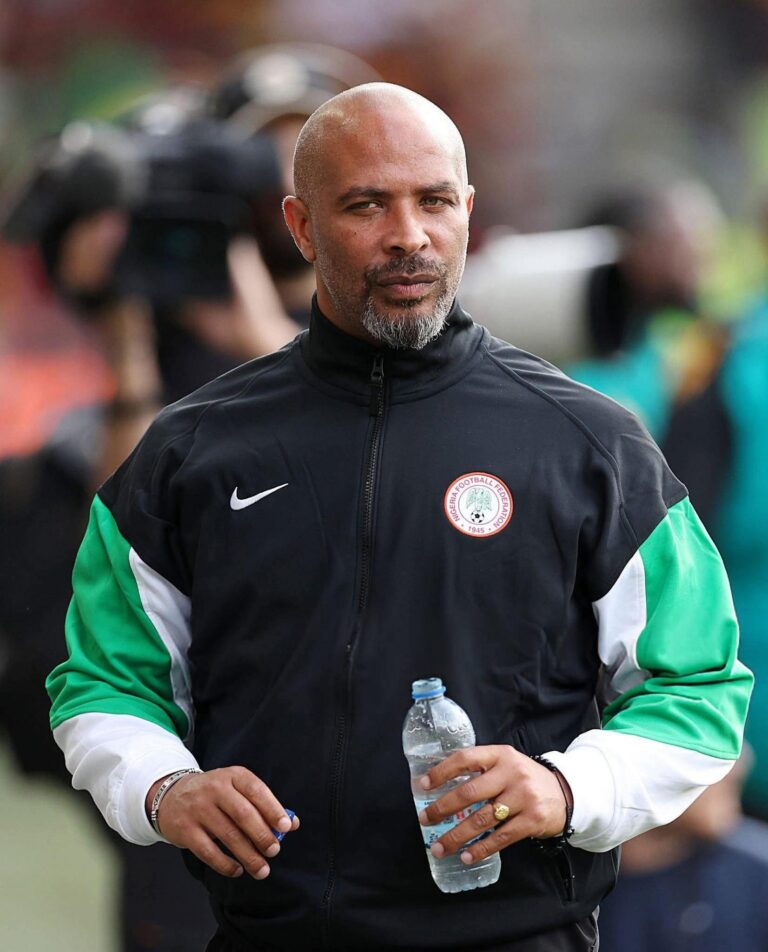
Head coach of the senior national team of Nigeria Eric Chelle has no issue with players born abroad requesting to play for Nigeria but he won’t actively chase any of them unless they signify their interest of playing for the team, OwnGoalNigeria.com can exclusively reveal.

Chelle has already capped German born Werder Bremen defender Felix Agu in the Unity Cup, playing him from the start in the 2-2 draw against Jamaica in the final which Nigeria later won 5-4 on penalties. Agu is seen as the first of many who will switch to the team with the Malian at the helm.

However that appears not to be that case, the coach isn’t looking at that option for now, rather he is focused on the games in September and building his team, tactics and also style of play for the crucial world cup qualifiers games against Rwanda and South Africa respectively.

” Chelle has no problem with players born abroad playing for the team, but it won’t be his focus for now because the idea and the logic of his appointment is to qualify the team for the world cup. We are in a very dicey situation and it requires total concentration to tactics, players selection and also style of play for the September games. That is all he is concerned about”, a source close to the coach revealed.

Pressed on if that means Agu will be the sole name to be capped by the coach between now and the games , he remained coy but said there is always room for players who showed commitment to the cause of the team like Agu.

” You can’t say no to a player that you know will improve your team especially if he says he wants to play for your team. Nigeria need the best of legs for the games of the qualifiers regardless of where they are born but you have to be committed to get the attention of Chelle”, he stated.

Ade Emmanuel

We Are In Talks With Osimhen’s New Agent – Club’s Vice President Reveals Transfer Talks

0

The new agent of Nigeria international striker Victor Osimhen is currently locked in talks with Galatasary over a permanent signing according to the vice president of the team president Ibrahim Hatipoglu.

Osimhen famously turned his back on a big money move to Saudi Arabia side Al-Hilal following his impressive season while on loan to Galatasary from Napoli, who are demanding a fee in excess of €70m for his permanent exit.

Early reports this morning has it that Liverpool have held talks with his representative on signing him, but according to Hatipoglu talks for him to remain with them after the signing of Leroy Sane from Bayer Munich is progressing nicely with George Gardi, who now represents Osimhen rather than Roberto Calenda who was with him the past two years.

Gardi was key to Osimhen joining Galatasary last summer after a failed attempt to join Chelsea ended up leaving him with no option. “When they offered us Osimhen, we didn’t need a striker, but we signed him in two days.” Hatipoglu told AS via TMW.

“Abdullah Kavukcu, head of transfers, is handling the process alongside Italian agent George Gardi. With each passing day, the chances of Osimhen staying at Galatasaray increase.”

Mohammed Mowiz Suleiman

NFF Welcome Decision By Boniface To Quit Super Eagles – We Can’t Beg Him To Play For Nigeria

0

The Nigeria Football Federation (NFF) will not stop Victor Boniface from quiting the senior national team of Nigeria following his post on Instagram, where he announced that he has quit the team.

24 year old Boniface made the announcement immediately after the 1-1 draw against Russia a week ago, a game where he once again posted a below par performance that led to his substitution after the half time break.

He later deleted the post but still hasn’t made a post to clear the air on the cryptic post leaving his future with the team open for discussion. A situation that has triggered reactions from a chieftain of the NFF.

” We can’t force a player to play for the national team of his country. By the time he officially communicate his decision to us (NFF), I can tell you nobody will attempt to stop him because it’s his decision and we have to respect it”, he told OwnGoalNigeria.com.

When we showed him an interview where the spokesman of the Federation said they knew Boniface was just joking with the post about his retirement from the team, he reacted by saying sensitive issues like that especially after a game where he played poorly shouldn’t be entertained.

” You don’t joke with sensitive issues like that especially immediately after playing poorly in a game. That is unacceptable and the sooner we start making players feel the effect of their behavior, the better it will be for the team. This is the senior national team of Nigeria for God sake”, he concluded.

Mohammed Mowiz Suleiman

From Diallo to Guirassy: Season’s best African players

0

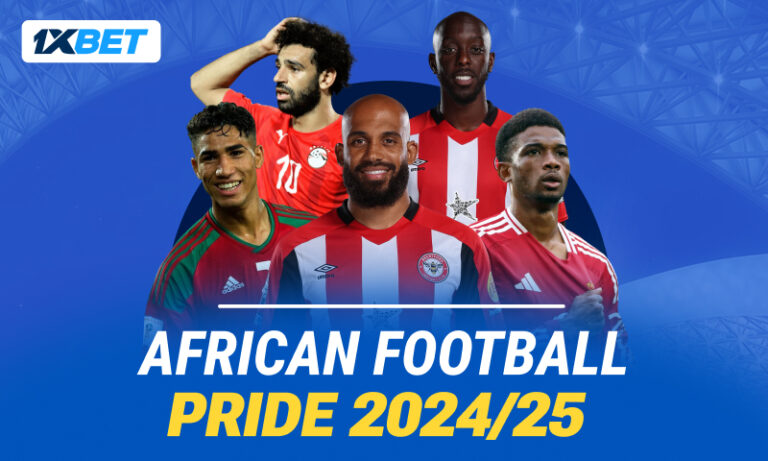
Global brand 1xBet wraps up the 2024/2025 season by highlighting its top African stars, players whose performances lit up Europe’s top leagues.

Stay in rhythm with the sport you love: follow the link and place your bets onon the most exciting events. Remember, betting is entertainment, not a source of income. Play responsibly, enjoy the thrill, and savor every emotion with 1xBet.

Mohamed Salah

The Egyptian icon delivered yet another phenomenal season. With dazzling dribbles, pinpoint passes, and spectacular goals, Salah led Liverpool to their historic historic 20th English league title.

Scoring 29 goals, he finished as the Premier League’s top scorer, and also topped the assist chart with 18 setups. In total, Salah contributed to 47 goals, matching the record set by Andy Cole and Alan Shearer back when the league had 42 matches per season.

He was named Premier League Player of the Season for the third time in his career and also received the FWA Footballer of the Year award.

Had Liverpool advanced further in the Champions League, Salah might have been a frontrunner for the Ballon d’Or. Even without it, he remains one of the greatest African players in history.

Serhou Guirassy

The Borussia striker enjoyed the most prolific season of his career. Guirassy scored 21 goals in the Bundesliga and became the first African footballer to finish as top scorer in the Champions League, sharing the honor withBarcelona’s Raphinhaboth netted 13 goals.

The Guinean forward stood out with his physical power, smart positioning, and calm, calculated finishing.

Achraf Hakimi

The Moroccan right-back can rightfully be considered the best in the world athis position. This season, he was a key figure in Paris Saint-Germain’s historic treble, helping the official 1xBet partner assert dominance throughout the campaign.

It was Hakimi’s goal that opened the scoring in the Champions League final against Inter Milan. He ended the season with 9 goals and 14 assists, numbers that earned him well-deserved spots in the Ligue 1 and Champions League teams of the Season.

Amad Diallo

The young Ivorian winger was one of the few bright spots in a difficult season for Manchester United. At just 22, Diallo consistently took initiative, using his explosive pace and refined technique to create danger out of thin air. Against Southampton, he delivered a stunning hat-trick, scoring in a variety of styles.

Solo runs became his trademark, and his stats reflect his influence: 11 goals and 10 assists in 43 appearances.

He was named the club’s Player of the Month in January, and fans voted his spectacular strike against Manchester City as Goal of the Season.

Bryan Mbeumo & Yoane Wissa

This dynamic Brentford duo set the Premier League alight in 2024/2025. Mbeumo scored 20 goals, while Wissa added 19. Together, the Cameroonian and Congolese forwards tallied 13 assists, many of which they created for each other.

Their on-pitch chemistry made them a nightmare for any defense. Against Brighton, they combined for three goals, and in the clash with Ipswich, the pair were responsible for all four of Brentford’s goals.

Pick your favorite African footballer and place your predictions via the link.Just remember: always bet responsiblybetting is for fun, not profit.

Can African Languages Be the Future of Scientific Innovation in Nigerian Colleges?

0

Nigeria is one of the most linguistically diverse countries in the world, boasting over 500 indigenous languages. Yet, English remains the primary language of instruction, especially in higher education and scientific research. While English provides a common medium of communication in a multiethnic country, it also imposes limits on inclusivity, comprehension, and innovation. This raises a crucial question: Can African languages become catalysts for scientific advancement in Nigerian colleges?

The connection between language and learning is well-documented, and research suggests that students learn best in their first language. As Nigeria looks toward a more inclusive and dynamic future in education and science, the possibility of leveraging African languages for scientific innovation deserves serious attention.

Language as a Driver of Scientific Thinking

Language does more than communicate ideas—it shapes them. The vocabulary and syntax of a language influence how individuals process information, form hypotheses, and interpret results. Scientific thought, often perceived as neutral or universal, is deeply embedded in the language through which it is expressed. When knowledge is constructed exclusively in English, students who are not native speakers may face cognitive barriers that limit deep understanding or creative thinking.

Historically, scientific revolutions have flourished when people used their native languages. Arabic enabled groundbreaking work in astronomy and mathematics during the Islamic Golden Age. German and French drove innovation in 19th-century Europe. Scientific development in the mother tongue is not only possible but has proven to be highly effective.

Linguistic Landscape of Nigerian Colleges

Nigeria’s educational system operates primarily in English, which became institutionalized during colonial rule. English remains the language of formal instruction, examinations, academic writing, and professional advancement. This has had several consequences: many students struggle to understand complex scientific concepts because they first have to translate them mentally into their mother tongues.

Despite this dominance, major languages like Yoruba, Hausa, and Igbo are widely spoken in Nigerian colleges, especially in informal settings. Many students switch codes during discussions, reflecting the subconscious need to return to the comfort and clarity of their first language. Yet, these languages are largely absent in scientific instruction, reducing their potential as tools of innovation.

Challenges of Using African Languages in Science

One of the primary obstacles to using African languages in scientific settings is the lack of technical vocabulary. Concepts like “quantum entanglement” or “CRISPR” often have no direct equivalents in indigenous tongues. As a result, even if students wanted to use their native language, they would face limitations in precision and consistency.

Another issue is the scarcity of learning materials. Most scientific textbooks, journals, and databases are in English, and translating these resources is a labor-intensive and costly process. Compounding this is the societal perception that English is the language of progress, while local languages are seen as suitable only for casual or domestic conversation.

Standardizing terminology within languages that have multiple dialects poses yet another challenge. For instance, the Yoruba spoken in Lagos might differ from that spoken in Osun or Ekiti, complicating the process of creating unified educational materials.

Why Indigenous Languages Matter in Scientific Learning

Despite the challenges, the benefits of integrating African languages into science education are substantial. Students are more likely to grasp scientific principles when taught in a language they fully understand. Research shows that instruction in the mother tongue significantly improves retention, comprehension, and critical thinking.

Beyond cognitive advantages, using African languages fosters cultural relevance. Students can connect scientific knowledge to their everyday experiences, indigenous practices, and local problems. For example, environmental studies can be tied to traditional farming systems, or medical science can draw from herbal pharmacology long embedded in local cultures.

By including local languages in scientific discourse, Nigeria also democratizes access to knowledge. Rural students, who often struggle with English proficiency, can participate more actively in scientific inquiry and innovation when the language barrier is lowered.

Steps Toward Multilingual Scientific Education

Achieving a shift toward African language integration in science requires systemic planning. First, there must be a concerted effort to develop scientific lexicons in major Nigerian languages. This can be done by combining linguists, scientists, and educators in collaborative translation workshops.

Second, curricula should gradually introduce bilingual instruction. Primary scientific concepts can first be explained in both English and a major local language, allowing students to build understanding without discarding global relevance. Over time, more complex material can be developed in the local language.

Policy support is crucial. The Nigerian government can play a pivotal role by funding language-based education research, providing incentives for institutions that pioneer multilingual approaches, and establishing regulatory frameworks that recognize the validity of indigenous languages in higher education.

Equally important is training teachers to deliver scientific content in both English and local languages. Many educators are themselves products of English-only education systems and may need retraining or support to make the switch.

The Role of Technology and Media

Digital tools can significantly accelerate the integration of local languages into education. Apps, e-learning platforms, and AI-driven translation systems help make educational content more accessible in native tongues. For instance, online glossaries and multilingual science podcasts can complement traditional classroom instruction. These tools, when coupled with an AI text detector, ensure content quality, verify authenticity, and support accurate translation efforts.

Additionally, radio and television—already popular across Nigeria in local languages—can play a vital role in spreading scientific knowledge. Educational programs broadcast in Yoruba, Hausa, or Igbo can introduce scientific ideas to broader audiences, helping to normalize these concepts in everyday conversation and promote learning beyond the classroom.

Models and Case Studies from Africa and Beyond

Several African countries offer examples of local language use in education. In Tanzania, Kiswahili is used to teach science and mathematics in early grades. South Africa promotes instruction in its eleven official languages, including in STEM subjects. In Ethiopia, Amharic is used as a medium of instruction alongside English in universities.

Within Nigeria, some universities like Obafemi Awolowo University have initiated small-scale efforts to translate science textbooks into Yoruba. Pilot programs in teacher training colleges have shown that students taught in their mother tongue perform better in science-related subjects.

Deconstructing Globalism: The Role of English

One common argument against local language integration is that English connects Nigeria to the global scientific community. While this is true, it doesn’t require the exclusion of indigenous languages. A multilingual approach can maintain access to international research while fostering local innovation.

Countries like China, Japan, and Germany conduct advanced research in their native languages and still lead in global science. Nigeria can adopt a dual-language model, where foundational learning is done in local languages and advanced research can bridge to English or other international languages.

Costs and Feasibility: Is It Practical?

Critics often argue that integrating African languages into science is costly and time-consuming. While the initial investment is significant, the long-term benefits—improved learning outcomes, increased innovation, and broader participation—far outweigh the costs.

A phased implementation strategy can make the transition manageable. For example, initial efforts can focus on basic sciences and gradually expand to applied fields like engineering or medicine. Partnerships with international bodies and NGOs can also help offset costs and provide technical expertise.

Towards a Culturally Rooted Scientific Identity

Building a scientific community that reflects Nigeria’s linguistic and cultural diversity is not just about inclusion—it’s about innovation. African knowledge systems, from herbal medicine to ecological management, offer untapped resources that can enrich global science if properly harnessed. These systems are best preserved and explored in the languages in which they were developed.

By giving African languages a role in formal science, Nigeria cultivates a new generation of scientists who are not only technically skilled but also culturally grounded. This fusion creates space for uniquely Nigerian contributions to global scientific challenges, from climate change to public health.

Conclusion

African languages are not relics of the past—they are keys to the future. Their integration into scientific education in Nigerian colleges has the potential to unlock deeper understanding, enhance innovation, and ensure that the benefits of science reach all corners of the country. While the path is complex and demands careful planning, the rewards are immense: a more inclusive, creative, and rooted scientific culture that speaks not just in English, but in the many voices of Nigeria.

Osimhen’s New Agent Working On Keeping Him At Galatasary- Club’s Vice President Reveals

0

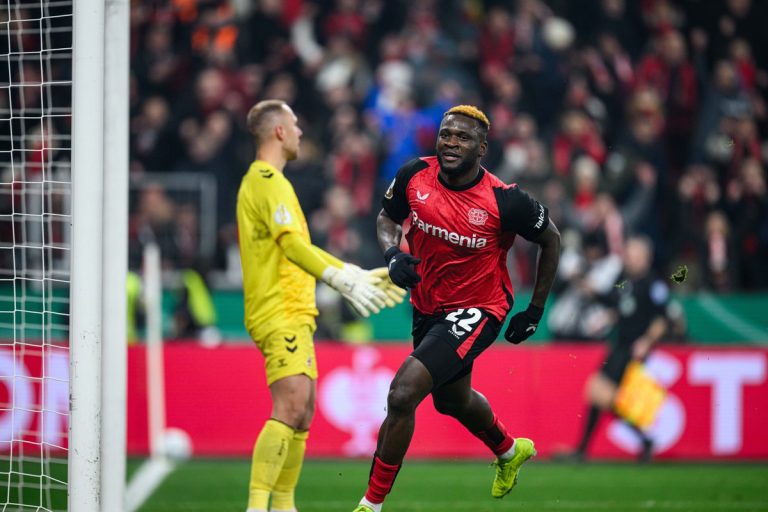
“When they offered us Osimhen, we didn’t need a striker, but we signed him in two days.” Hatipoglu told AS via TMW.


“Abdullah Kavukcu, head of transfers, is handling the process alongside Italian agent George Gardi. With each passing day, the chances of Osimhen staying at Galatasaray increase.”

Al Ain Pick Three Nigerian Players In Their Squad For Club World Cup Including Young Goalkeeper

0

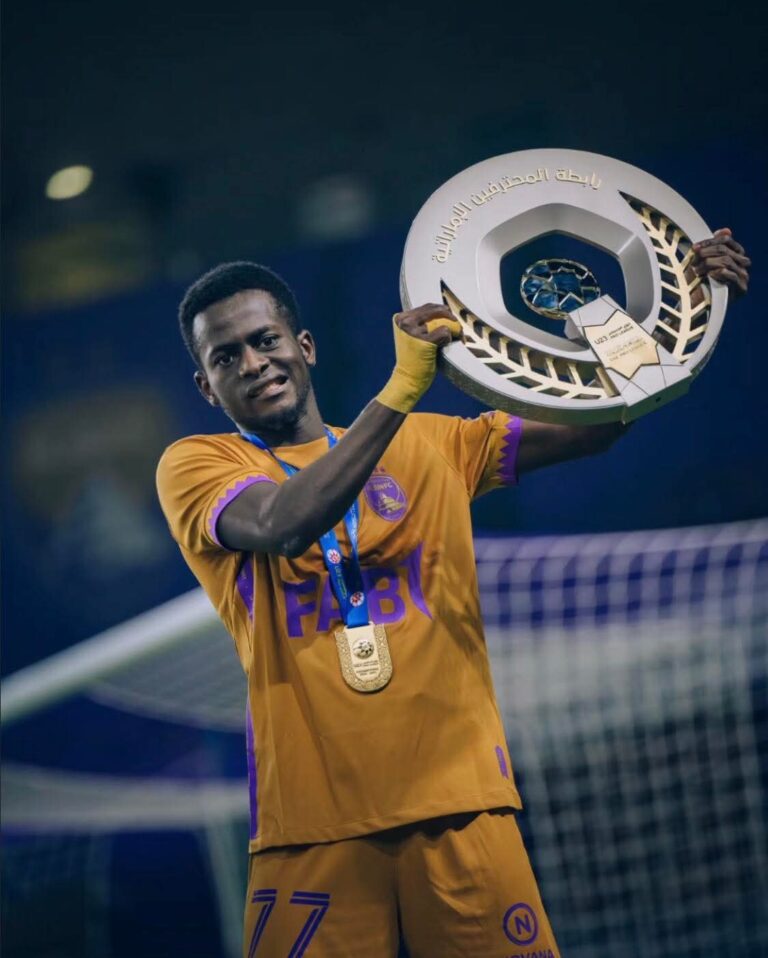
United Arab Emirates side Al Ain have included three Nigerians in their squad for the club world cup which begins in four days time, OwnGoalNigeria.com reports.

Picked as one of the representative of Asia in the newly introduced tournament by world football governing body, the Abu Dhabi based side have made their official list for the tournament public ahead of their first game on the 19th against Juventus.

In the same group as Manchester City and one of Africa’s representative Wydad AC. The Nigerian trio of Halilu Sarki a member of the U20 team of Nigeria to the last world cup, a midfielder Joshua Udoh and goalkeeper Hassan Sani.

Among the trio only Sarki has featured for the first team of the UAE side but Sani is said to be close to the first team after making the bench in their games in the league as backup goalkeeper.

Their inclusion swelled the number of Nigerian players who have been confirmed to be at the tournament to five with the duo of Onuche Ogbelu of Esperance and Zaidu Sanusi of FC Porto also included by their respective teams.

Mohammed Mowiz Suleiman

Belgium Giants Club Brugge Clarifies Coaching Role Handed To Former Super Eagles Striker

0

19 times Belgium league champions Club Brugge have clarified the role of former Nigeria international forward Joseph Akpala who has joined the club as part of their coaching crew, OwnGoalNigeria.com reports.

In confirming our reports on his employment, the coach said the 38 year old will work as the Player Development Coach within the technical setup, with a focus on the individual development of players expected to be a part of the first team in the nearest future A-core.

He will also be a part of the first team crew of Head Coach Nicky Hayen, Game Preparation Coach Hayk Milkon, Physical Coach Eddie Rob and Goalkeeper coach Wouter Biebauw.

Capped 9 times by Nigeria at senior level during his playing days, the 38 year old was picked by the his former club as a replacement for Michiel Jonckheere who took over as the head coach of fellow top division League side KV Kortrijk.

Akpala was on the books of Club Brugge from 2008-2012 and distinguished himself as their top marksman with 39 goals from 105 games before leaving for the German Bundesliga, where he played for Werder Bremen.

He will resume in his role in pre season, and it will be the second time in his short managerial career that he will be playing the role of assistant coach as he occupied the same role at Kortrijk under various coaches.

Below is the list of coaches he assisted at his previous club.

Assistant Manager of: Freyr Alexandersson (38 Games), Bernd Storck (29 Games), Adnan Custovic (10 Games), Glen De Boeck (9 Games), Yves Vanderhaeghe (8 Games), Edward Still (8 Games).

Mohammed Mowiz Suleiman

Sheffield United Complete Signing Of Another Nigerian Player

0

English Championship side Sheffield United have completed the signing of 20 year old Nigerian Ehije Ukaki six months after signing of his fellow Nigerian Christian Nwachukwu from the same club Botev Plovdiv, OwnGoalNigeria.com reports.

The 20 year old scored seven goals in 37 games in all competitions last season. A tally that has led to questions about signing the winger on a three year deal, forcing head coach Chris Wilder to defend his signing.

“Ehije is a player who has been identified through our data driven strategy and is someone we’re looking forward to developing,” Blades boss Chris Wilder told the club website.

“He’s an emerging talent, still only 20, who has enjoyed some experience of European football early in his career, so there’s a base to work from”, he explained.

Ukaki also took to social media to express his happiness at joining the Championship side who lost out on promotion to the English Premier League through the play off, which was won by Sunderland. “Hello Blades fans, it is Ehije Ukaki here. It’s great to be signing for Sheffield United, I am looking forward to moving over, I am ready for the challenge”, he said on his Instagram page.

Daniel Martins