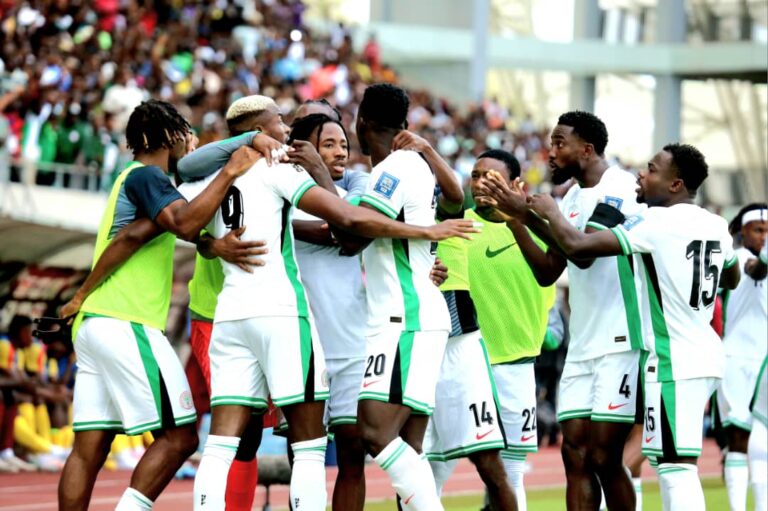
Home Blog Page 90

Passport Issue Solved – Blackburn Rovers Defender Get All Clear To Represent Nigeria At The AFCON

0

Blackburn Rovers defender Ryan Alebiosu has been given the all clear to represent Nigeria at the upcoming Africa Cup of Nations in Morocco, OwnGoalNigeria.com can exclusively reveal.

Like we exclusively reported last week , the 23 year old has already pledged his international future to Nigeria despite his eligibility for England but was facing difficulties in securing a Nigerian passport.

That report got to the Nigeria Football Federation (NFF) who helped in quicken the process and he finally got his passport, given head coach Eric Chelle the permission to include him in his squad for the tournament.

Chelle is said to be keen on the defender who has been a revelation this season in England, largely due to the injury to Ola Aina and Benjamin Fredrick who have both filled in at right back in big games ahead of Bright Osayi-Samuel.

Alebiosu is excepted to push Osayi-Samuel for the right back spot and with his performance so far in the same league as the Birmingham City man, it’s surely looking like he will get the nod.

Mohammed Mowiz Suleiman

Osimhen’s Backup – Durosinmi Tops New Names In Super Eagles Squad For AFCON

0

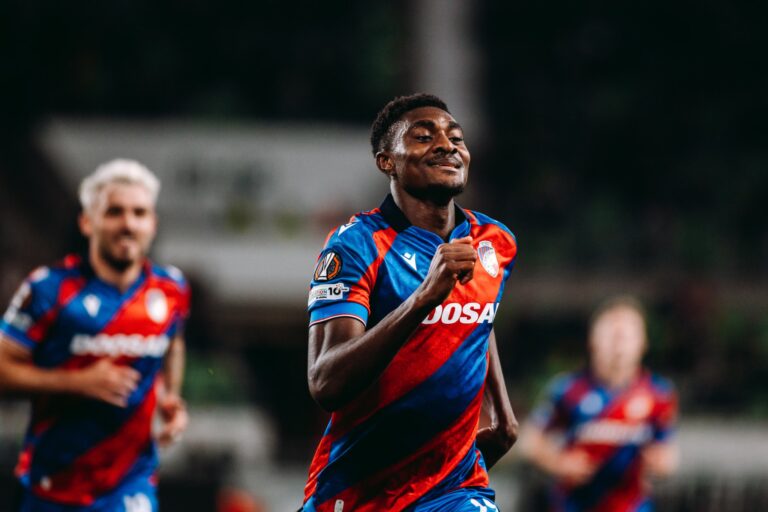
Head coach of the senior national team Eric Chelle has handed a first time call up to Viktoria Plzen of Czech Republic forward Rafiu Durosinmi in his squad for the Africa Cup of Nations, OwnGoalNigeria.com exclusively gathered.

22 year old Durosinmi has 12 goals in 27 games this season proving his full recovery from the knee injury that cost him a move to Bundesliga side Eintracht Frankfurt 18 months ago.

Chelle has been largely impressed with his performance this season particularly in the Europa league where he has two goals in five games. He also scored twice in the UEFA Champions League qualifiers this season.

He is seen by the coach as a suitable back up option to Osimhen, but he faces stiff competition from the trio of Terem Moffi, Jerome Akor and Tolu Arokodare. Paul Onuachu is also set for a return to the team after his exploits in Turkey this season.

” I can tell you that Chelle spoke with the agent of Durosinmi before including him in his list of players for the tournament. We will wait to see if he makes the final 28 man list”, a source revealed.

The list of players is expected to be made public later today with the team’s camp set to open on the 8 of December in Egypt.

Chelle Edits Super Eagles 55 Man List For AFCON, Insist On Five New Players

0

Head coach of the senior national team of Nigeria Eric Chelle has picked his final squad for the upcoming Africa Cup of Nations in Morocco, OwnGoalNigeria.com reports.

The coach who initially submitted a 55 man list for the tournament to the Nigeria Football Federation (NFF), and after yesterday’s meeting with the technical committee of the football house he picked his final team.

Chelle picked 28 players rather than the 27 permitted by CAF with an argument that he wants an addition player with doubts over the fitness of a certain player who could end up not making it.

A target of reaching the semi final was also set for the Malian with the NFF showing their full backing to him as the one to start the rebuilding of the team. Chelle also picked five new players in the team.

It is expected that the list will be made public later today by the NFF with the camp of the team opening on the 8th of December in Egypt.

Mohammed Mowiz Suleiman

Chelle Increases Super Eagles Squad List For AFCON After Meeting With NFF Technical Committee

0

Head coach of the senior national team of Nigeria Eric Chelle has been given the nod by the Nigeria Football Federation (NFF) to pick 28 players in his squad for the upcoming Africa Cup of Nations, OwnGoalNigeria.com can exclusively reveal.

Chelle made a case to have an enlarged squad for the tournament as part of the process of rebuilding the team, and it was granted by the technical committee of the NFF in a meeting yesterday in Abuja.

It means the coach will work with a squad of players he intends to build his team around in the future, with the NFF now settling for him as the one to begin the next phase of the team’s development after back to back failure to qualify for the World Cup.

In the list a couple of young players were handed a first time call up, and Chelle believe they will benefit from being a part of the team at the tournament which will be useful to the team in the future.

They will resume camping for the tournament on the 8th of December in Egypt.

Defender With Nigerian Roots Axed From South Africa 25 Man List For AFCON

0

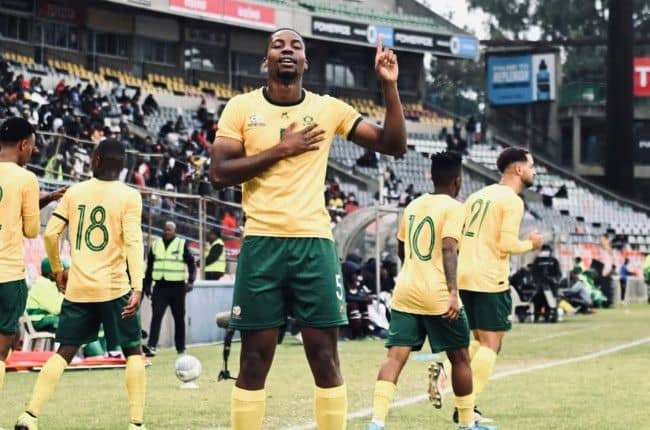
The dream of Ime Okon representing South Africa at the upcoming Africa Cup of Nations took a drastic hit after he was omitted from the final list of 25 players for the tournament picked by Hugo Broos, OwnGoalNigeria.com.

Broos included the 21 year old in his preliminary list of 55 players for the tournament, putting to rest speculation about the player’s commitment to playing for South Africa after his previous comments on wishing to play for Super Eagles.

Born in Johannesburg to a South African mother and Nigerian father, has long been eligible to represent either Bafana Bafana or the Super Eagles.

Okon made it clear in 2023 when he got his first invitation to the senior national team of South Africa that his preference is Bafana Bafana, but some fans still weren’t convinced.

Speaking on Radio 2000’s Game On, Okon reaffirmed his commitment, stating that he is South African and intends to continue representing Bafana Bafana.

“People always talk, but at the end of the day, I know where my heart is,” Okon in an interview two days ago.

“I played for South Africa at the COSAFA Cup, and I scored, and South Africa is everything to me.

“I don’t know anything else besides SA. This is home, even if Nigeria can call me up, SA is home, that’s all I have to say.”

Despite that the Hannover 96 defender who made his mark in South Africa with SuperSport United, before his move to Germany didn’t make the final list of players.

Dutch League Midfield Star Gibson Yah Told To Snub Super Eagles For Netherlands

0

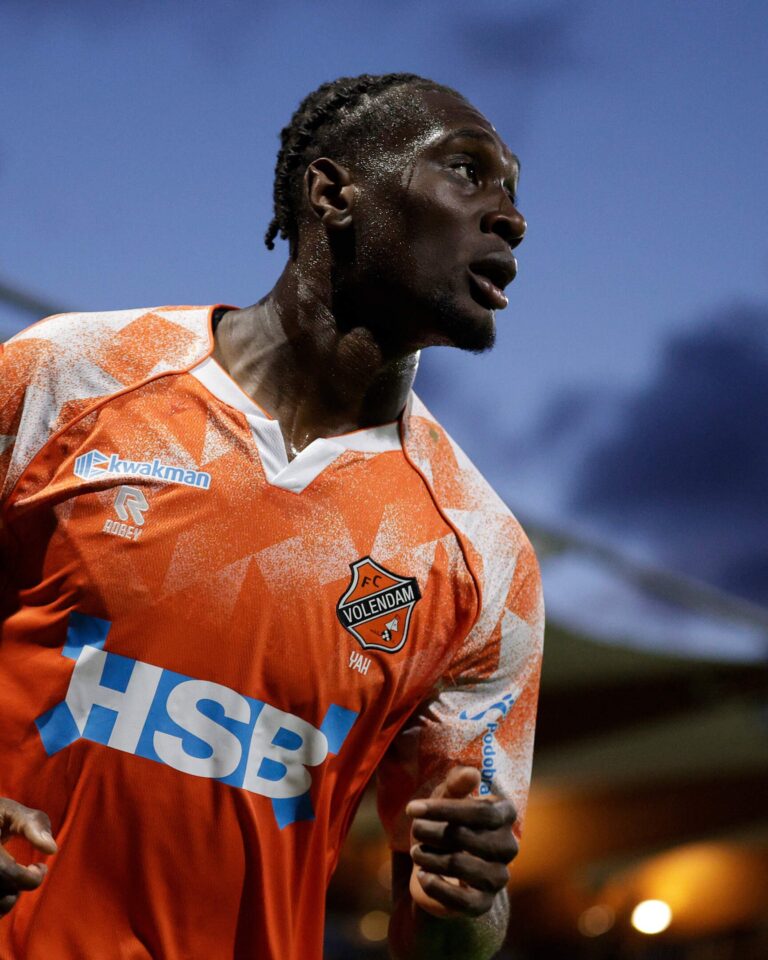
Former Dutch football player and manager Andries Jonker says FC Volendam midfielder Gibson Yah will be a senior international for the Dutch team in the nearest future after his breakthrough year in the top division, OwnGoalNigeria.com reports.

Yah has been one of the most talked about players in the league with his eye catching performances for the newly promoted side, and it had led to talks of moving to a big club in the summer and Jonker agrees.

Jonker says he thinks Yah is “really fantastic.” “It seems like the top clubs are searching en masse for a number six. They always have to be found abroad. But there’s another one at Telstar who makes me think, ‘Wow, what a player,’ Tyrone Owusu,” Jonker begins his story.

“I’m not someone who decides someone should be in the Dutch national team after two or three matches, but those are players, Owusu and Yah… Just follow them for six months. If you maintain this level, they won’t be playing for Volendam for that long. I think the top Dutch clubs could really look into that. It’s great that these kinds of players are rising to the top and that they’re given a platform in the Eredivisie to develop themselves.”

Eligible for Nigeria through his parents, we can exclusively reveal that talks have been held about playing for the senior national team of Nigeria with representative of head coach Eric Chelle, but the player presently doesn’t have a Nigerian passport.

While some sources say he is seriously considering Nigeria, a representative of his agency said the 24 year old hasn’t made a commitment to his international future yet.

Mohammed Mowiz Suleiman


How FIFA Evolved from Tape Decks to a Global Hit

0

FIFA’s story is the tale of a football simulation that grew up alongside its audience—shifting from isometric sprites and cartridge whirs to motion-captured drama, global licensing, and billion-dollar live services. It is also a story of decisions: when to chase realism, when to embrace spectacle, and how to balance authenticity with the realities of business, technology, and taste.

Today, the game stands as one of the most recognizable football simulators in the world and has evolved into a full-fledged esports title. You can often catch online streams where pro players compete, and even place bets on their matches, just like real football. If you check reviews of operators and their bonuses on a reliable expert site that analyzes the betting market, you might even find bonuses that can be used for betting on FIFA matches.

But the game didn’t start out this way. Let’s look at how it got here: the scrappy beginnings, the television years and the online explosion, and the latest rebrand that severed a three-decade partnership and set the series on a new path.

The Early Years

The first breakthrough arrived in 1993 with FIFA International Soccer, which popularized an isometric camera that felt astonishingly fresh in the 16-bit era. It was arcade-leaning and gloriously imperfect—fans still trade stories about a notorious “goalkeeper block” quirk that could deflect the ball into the net—but it was addictive, loud, and new. A year later FIFA 95 added clubs, and then FIFA 96 made a foundational decision: secure the FIFPro license and ship real player names. Pair that with the “Virtual Stadium” tech—2D sprites moving in a real-time 3D bowl on Saturn/PlayStation/PC—and FIFA stopped being “a” football game and started becoming “the” one.

The Road to ’98, Indoor Courts and TV Sound

FIFA 97 flirted with polygonal models and even an indoor mode; FIFA: Road to World Cup 98 then went maximalist—full World Cup qualifying with every FIFA nation, era-defining menu swagger, and a licensed soundtrack that made menus feel like music television. It was the first time many players felt that FIFA wasn’t just simulating football—it was simulating being around football.

Going Prime Time

The late 90s and 2000s tuned presentation to feel like a broadcast: named commentators (from John Motson onward), licensed leagues, and a drumbeat of annual polish. The series learned to speak television’s language—camera pans, cutaways, broadcast wipes—so the pause between passes started to feel like airtime rather than downtime. Behind the scenes, licensing became a chess match: leagues, clubs, and federations all carried separate rights. That modular approach would prove crucial decades later when the FIFA name itself disappeared—but most real-world licenses stayed.

FIFA 16 made history by adding women’s national teams, a milestone that required bespoke motion capture and model work; it also broadened the audience and the game’s sense of who football is for. A year later FIFA 17 launched The Journey, a story-mode fronted by fictional prodigy Alex Hunter, made possible in large part by the switch to DICE’s Frostbite engine. And in FIFA 20, EA answered years of community nostalgia with VOLTA Football—small-sided, wall-assisted street play that nodded to FIFA Street yet lived inside the main game, with its own modes, physics, and swagger.

Engines, Licenses, Ultimate Team, and the Big Split

Technically, the series has worn several engines. After years on EA’s sports tech stack, FIFA 17 jumped to Frostbite, enabling cinematic lighting, richer animation trees, and story cutscenes. On new consoles, FIFA 22 introduced Hypermotion—11-a-side motion capture merged with machine-learning animation blending—to push responsiveness and physicality. Whether you loved or disliked the feel, it marked a philosophical bet: data-driven realism as a design pillar.

The Ultimate Team Era

Another decisive choice arrived with FIFA 09: Ultimate Team. The card-based team-building mode began as a DLC experiment and evolved into EA’s live-service backbone, shaping metagame rhythms, content drops, and even how players evaluate footballers—as items with stats, chemistry, and price history. With it came controversy: countries and regulators scrutinized randomized packs as potential gambling, prompting legal tests and policy shifts. Even so, UT became a “Swiss clock” of bookings growth—and a cultural lingua franca for football gaming.

When FIFA Lost Its Name

Licensing has always been fluid. In 2019, EA temporarily lost Juventus’ club license, replacing it with “Piemonte Calcio” before Juve returned in FIFA 23—an instructive reminder that the FIFA name never guaranteed every badge. The bigger tremor came in 2022, when EA and FIFA ended their 30-year naming deal. EA kept its 300-plus separate licenses and rebranded as EA Sports FC, effectively betting that the game—and its web of league/club/player agreements—mattered more than the four letters on the box.


Three Eras, Three Design Philosophies

Every generation of FIFA chased a different idea of what “real” football should feel like. From playful experiments to near-photographic realism to the live-service machine that runs today, each era reflects how players, tech, and culture shaped the game’s priorities.

The Cartridge Era

The 90s were about identity. Isometric angles, indoor five-a-side, and later, the all-in World Cup qualifying dream of FIFA 98. The design tone tilted toward immediacy; mastery meant learning camera quirks and animation timing as much as tactics. Soundtracks became taste-making mixtapes, and commentary turned matches into TV pastiche.

The HD Era

As TV money reshaped real football, FIFA mirrored the polish: licensed leagues, lifelike broadcast packages, ever-denser animation. Career Mode matured with scouting and youth systems; The Journey tried to capture the personality drama behind a career. The result was a sim that felt less like “a football game” and more like “football as you’ve seen it on Sunday.”

The Live-Service Era

From FIFA 09 onward, Ultimate Team reframed the cadence of play: daily content, themed events, and a transfer market shaped by real-world trends. VOLTA embraced culture and fashion; Hypermotion signaled a long arc toward data-driven animation. The post-FIFA rebrand to EA Sports FC showed the series’ confidence that its ecosystem—licenses, UT economy, and yearly cadence—could survive without the governing body’s brand. Market wobble around FC 25 reminded everyone that momentum still relies on fun, not just infrastructure, but the spine remains intact.


Ten Pivotal Decisions (and What They Meant)

Here’s a quick guide to the choices that reshaped how FIFA looked, played, and was licensed. Think of it as a timeline of technical, creative, and commercial bets that set the series’ priorities for years.

  1. FIFPro in FIFA 96
    Real names created emotional gravity. Fans don’t just control “a striker”—they control Shearer or Ronaldo. That identity fuel powered marketing, commentary lines, and playground debates.
  2. RTWC ’98: “Every Nation” + Indoor
    Packing in all qualifiers—and indoor mode—made a maximalist statement: if it’s part of football culture, FIFA will try to include it.
  3. Women’s National Teams (FIFA 16)
    Beyond representation, this forced new pipelines—animations, body rigs, audio commentary checks—that would benefit authenticity elsewhere.
  4. The Journey (FIFA 17)
    A systemic bet that football is also a story. It opened the door to character-driven sports narratives in mainstream sims.
  5. Frostbite Switch (FIFA 17)
    A risky engine migration that unlocked better lighting/cinematics—but demanded years of paying down tech debt.
  6. Ultimate Team as Live Service
    The design of progression, scarcity, and events redefined player retention—then faced ethical scrutiny over packs.
  7. VOLTA (FIFA 20)
    Reconnected the series with street flair and small-sided culture, within the main game rather than a spin-off.
  8. Modular Licensing
    The Juventus detour (Piemonte Calcio) showed that the web of licenses is complex; the brand on the cover isn’t a magic key.
  9. EA–FIFA Split → EA Sports FC
    A seismic naming change—yet the world’s leagues, clubs, and players mostly stayed put with EA. The thesis: “football” > “FIFA.”
  10. Hypermotion & ML Animation
    EA’s statement that the simulation’s future lies in data volume and AI synthesis, not just hand-authored moves.

Where the Legend Goes Next

Annual sports games thrive when they reflect the present: new kits, chants, camera palettes, and viral techniques. Expect EA Sports FC to keep braiding real-world narratives into seasonal drops—women’s club competitions, expanded international calendars, and local broadcast styles—as football itself diversifies.

The Ultimate Team economy will stay central, but pressure for clearer odds, youth safeguards, and fairer monetization will grow. Regulatory winds already shape design in parts of Europe; the healthiest future is one where compulsion gives way to transparency and player agency.

It’s not just photogrammetry or licenses. It’s that, across decades, the series captured how football feels: the crowd surge, the gasp on a near-post save, the petty fury at a missed input, the ecstasy of a green-timed volley. It learned to speak television, then live services, and finally its own name. Whatever you call it—FIFA or FC—the legend endures because it kept asking the right design question: how can the screen feel more like the sport we love?

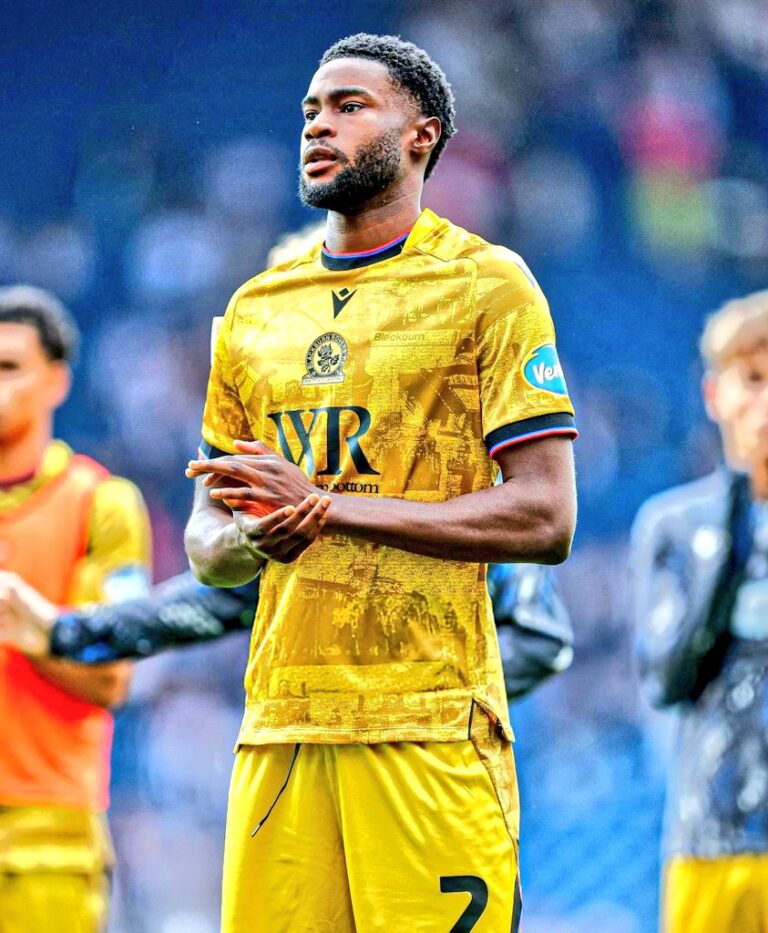
NFF Chief Reveals- Super Eagles Preliminary List For AFCON Has So Many Young Players

0

Coach of the senior national team of Nigeria Eric Chelle picked a host of young players in his preliminary list of players for the upcoming Africa Cup of Nations tournament (AFCON) in Morocco, OwnGoalNigeria.com reports.

Chelle has already submitted his list to the NFF but he is expected to trim it down from the 55 to a sizeable number before the commencement of camping for the tournament next month.

The coach showed faith in a lot of young players although not many are expected to make the final cut for the tournament. A chieftain of the Nigeria Football Federation (NFF) praised the coach for taking such a bold step which is crucial to rebuilding the team.

” When I saw the list with so many young players I was impressed. I really think it’s a bold step from a coach who has one eye on the future. I know a lot of them won’t make it to the tournament proper but it’s a step in the right direction in rebuilding the team”, he said.

Meanwhile he called on Nigerians to express patience over the public announcement of the list saying it will be published, when the coach gives the go ahead to make it public in the coming days.

No Nigerian Passport: Blackburn Rovers Defender Feared Out Of Super Eagles AFCON Plans

0

Blackburn Rovers defender Ryan Alebiosu is in danger of not making the Super Eagles squad for the Africa Cup of Nations as he is yet to be issued a Nigerian passport, OwnGoalNigeria.com can exclusively reveal.

Born in England to parents of Nigerian descent, Alebiosu has already agreed to play for Nigeria at senior international level and can be immediately available for the AFCON as he hasn’t represented England at any level.

He has already held talks with head coach Eric Chelle, which informed his decision to start the process of acquiring a Nigerian passport in order to be available for the tournament in Morocco.

However sources say as at yesterday, the 23 year old is yet to submit his passport which means his name will be struck out and potentially replaced ahead of the start of camping on the 8th of December.

This season Alebiosu has excelled at right back for the English Championship side with one goal and assist in 16 games so far. He joined the club in the summer from Belgium side Kortrijk on an initial three-year contract with the option of an extra 12 months.