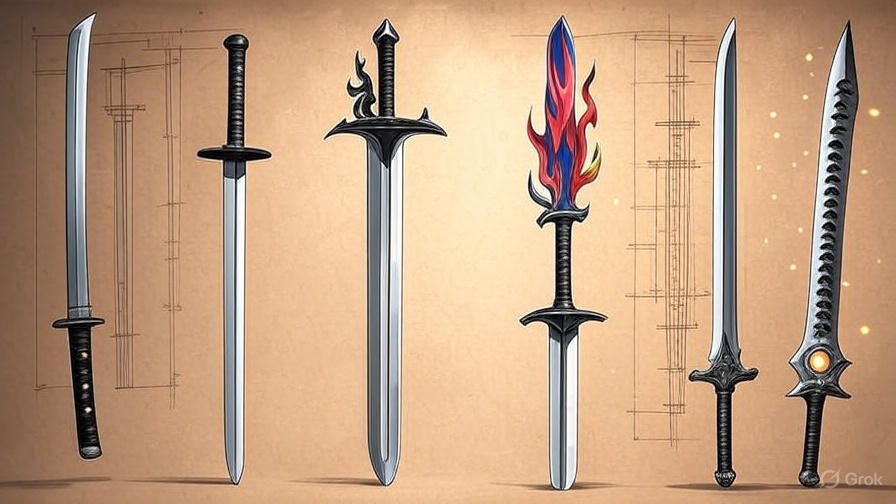
Anime blades do more than cut; they tell stories. Therefore, artists shape metal and myth into symbols of hope, duty, and power. Moreover, fans spot a hero’s sword from a single outline. In this step-by-step guide, we explore how Anime Blade Design grew from real history to wild fantasy. Also, we keep things simple, so an 11-year-old can follow along. Finally, you will see clear examples and safe tips for new collectors.
Roots In Real Steel
Anime pulled early ideas from Japanese swords. Therefore, creators looked at curve, balance, and shine. Traditionally, smiths used folded steel to add strength and beauty. However, anime artists do not melt metal; they draw feelings. So, they borrow the elegant curve, the clean line, and the quiet danger of a katana, then push those shapes further.
What Carried Over
- Thin, curved blades suggest speed; meanwhile, straight broad blades suggest raw power.
- Long hilts allow two-hand control; furthermore, they signal discipline and training.
- Simple guards keep the eye on the blade; however, bold guards show rank or clan.
Quick Example For Fans
Creators often start with a classic “manga katana” look, then add a twist. For a style tour, see Manga katana. You’ll notice slim profiles, clean scabbards, and elegant handles. Consequently, you can spot how anime pulls from real shapes while staying playful.
The Rise Of Signature Swords
As anime grew worldwide, blades became character logos. Therefore, the sword had to stand out on posters, toys, and games. Artists increased size, color, and detail. Moreover, they added names, spirits, and modes.
Design Moves That Popped
- Oversized Scale: Big blades read clearly on screen; however, balance in real life would feel tough.
- Element Motifs: Lightning lines, flame curls, or wind swirls show power at a glance.
- Color Codes: Red hints fury; meanwhile, blue hints calm duty; gold hints legend.
Why It Works
Fans remember simple shapes with bold edges. Therefore, a strong silhouette beats tiny detail. Also, color and pattern help you recall the hero during fast action.
Modern Blades Blend Tech And Fantasy
Today, digital tools help artists test shapes quickly. Consequently, they try layered edges, glowing cores, and folding segments. Moreover, game crossovers push function ideas: blades that split, lock, or transform mid-fight.
Popular Modern Trends
- Segmented Spines: Notches along the back suggest mechanical control.
- Energy Lines: Soft inner glow hints at magic or tech.
- Hybrid Guards: Half-ring guards protect the hand; meanwhile, they frame the hero’s stance.
Spotlight On A Fan Favorite
Many viewers learned blade language through famous series with named swords and clear growth arcs. For a themed example, browse a curated set of replicas here: Bleach Sword. You’ll see how color, guard shape, and hilt wrap change to match each wielder’s journey.
How Artists Build A Believable Blade
You can break Anime Blade Design into simple choices. Therefore, try these steps when sketching your own sword or judging one in a show.
Hilt First, Then Blade
Start with the hand. Also, decide if the hero fights fast or heavy. A long, two-hand hilt signals control; meanwhile, a short one hints quick strikes. Next, match the blade length to the hero’s body size. Finally, check the stance: does the design allow smooth draws and clean cuts?
Choose The Edge Story
- Single Edge: Classic speed and precision.
- Double Edge: Balanced offense from any angle.
- Serrations Or Teeth: Wild or feral tone; however, use sparingly for clarity.
Guard And Pommel Logic
Simple guards help tight sword work. Therefore, pick small ovals or circles for skilled fighters. Conversely, big, ornate guards fit nobles or ceremonial styles. A weighty pommel can balance a long blade; meanwhile, a slim end keeps the tip lively.
Add Meaningful Marks
Runes, family crests, or spirit seals should support the hero’s backstory. Moreover, marks near the base feel subtle and respectful, while marks down the spine feel loud and proud. Consequently, the viewer reads history at first glance.
Color, Texture, And Motion Readability
Good blades read well in action. Therefore, designers pick colors that pop against the hero’s outfit and the scene background. Also, they map textures to guide the eye.
Simple Color Rules
- Light blade vs. dark outfit, or vice versa.
- Warm hints for fierce scenes; meanwhile, cool hints for calm.
- One accent color on the hilt to anchor memory.
Texture Tips
Polished edges catch light and show motion; therefore, animators can sell speed with a single streak. Brushed flats kill glare; consequently, the audience sees the silhouette. Leather wraps give grip; however, metal wraps signal ceremony more than combat.
Safe Collecting For New Fans
Fans love replicas; however, safety comes first. Therefore, display sharp pieces out of reach and follow local rules. Also, choose quality makers with clear specs and honest photos. Moreover, practice with safe trainers before any choreography. Finally, store blades dry and lightly oiled to prevent rust.
Quick Care Checklist
- Wipe after handling; fingerprints can stain.
- Oil the blade lightly; meanwhile, keep scabbards clean.
- Use stands or hooks that hold weight evenly.
- Transport with covers and follow event rules.
Putting It All Together
Now you know the path: history inspires form, form serves story, and story shapes the final look. Therefore, when you watch a duel, study the outline, the guard, and the color. Moreover, ask what the blade says about the hero. If the answers come fast, the design works.
Quick Starter Guide For Your Own Design
- Pick a hero type (swift scout, calm master, or bold tank).
- Choose a hilt length that fits the style.
- Sketch three blade shapes: slim curve, straight broad, or short dagger.
- Add one power motif (flame, wind, or lightning).
- Test the silhouette in black only; therefore, check readability first.
- Add one accent color and one mark of meaning.
- Name the blade and write a one-line story.
Final Thoughts
Anime Blade Design grows with every new season. Therefore, artists mix old steel wisdom with fresh ideas. Meanwhile, fans learn to read shape, color, and motion like a language. With a few clear steps, you can enjoy each sword more—or design one that others remember.