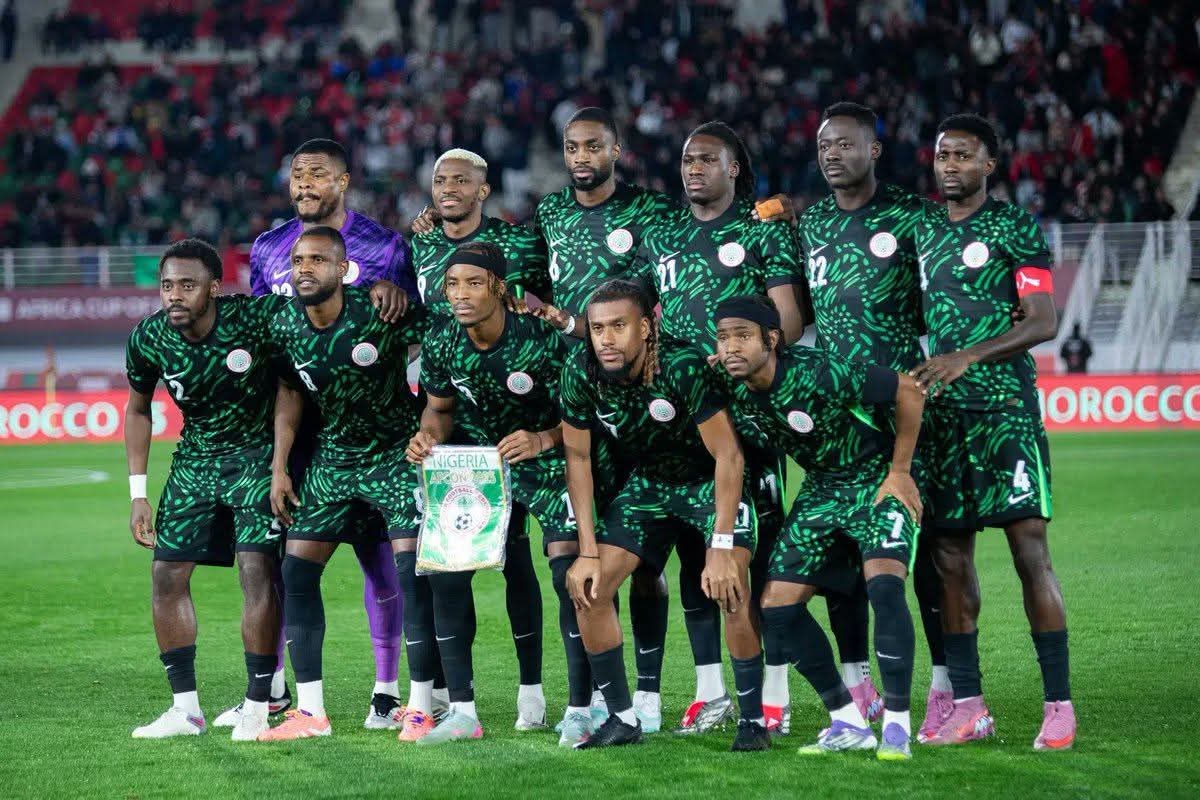
As the global football elite gathers in North America this month, the glaring absence of the green and white jersey hits home with agonizing clarity. For the second consecutive tournament, Nigeria will watch the world’s biggest sporting event from the sidelines, sealing a painful eight-year exile from the grandest stage. What makes this particular Nigeria World Cup qualification failure so bitterly difficult to swallow is the historic expansion of the tournament format. With a record ten African teams securing a place in the newly minted 48-team tournament, the Super Eagles still somehow contrived to miss the flight.
To compound the irony, fifteen elite footballers of Nigerian descent will be active in the tournament, scattered across nine different national team squads heading to the United States, Mexico, and Canada. While our diaspora flourishes on the world stage, the home front lies in ruins. Understanding why Nigeria did not qualify for the World Cup requires looking past simple bad luck. It demands a cold, clinical Super Eagles qualification analysis across tactical, managerial, structural, and psychological dimensions.
Tactical Instability and the Chelle Conundrum
The foundation of this qualification disaster was laid during a stuttering, uninspired group stage campaign. Placed in a group that was far from an insurmountable “group of death,” Nigeria routinely dropped vital points against modest opposition. Ultimately, finishing second in Group C proved fatal to their automatic qualification hopes, as they were completely surpassed by a more organized South African side.
This failure forced the team into a precarious, high-stakes knockout playoff against the Democratic Republic of the Congo. Over the course of a tense, nerve-shredding tie, the Super Eagles could only manage a draw, sending the match to the cruel lottery of a penalty shootout. Nigeria blinked first from the spot, and just like that, another World Cup dream evaporated.
At the heart of this collapse lies a profound failure in tactical identity under head coach Eric Chelle. While continental heavyweights like Morocco and Senegal have spent years engineering clear, collective playing styles, Nigeria under Chellelooked like a disparate group of talented individuals rather than a cohesive team. Despite possessing an enviable array of European-based talent—including Alex Iwobi, Ademola Lookman, Samuel Chukwueze, and Akor Adams—the coaching staff consistently failed to forge a functional offensive system.
Crucially, Chelle failed to get the best out of his biggest star, Victor Osimhen. Deprived of consistent service and isolated by rigid tactical setups, the reigning African football icon was frequently nullified by opposing defenders. This lack of imagination in chance creation and poor in-game management meant that Nigeria was consistently outperformed by tactically superior, cohesive units.
The Diaspora Drain and the Price of Administrative Failure
The ramifications of Nigeria’s systemic instability extend far beyond the pitch; they have severely compromised the nation’s long-term squad-building capacity. Historically, the Nigeria Football Federation (NFF) has relied on convincing elite dual-heritage talents to commit to the Super Eagles. However, the lack of a stable, competitive sporting project has turned the national team into an increasingly unattractive proposition for young players weighing their international futures.
The case of Carney Chukwuemeka stands as a damning indictment of this administrative failure. The Borussia Dortmund midfielder was firmly on the NFF’s radar for years, with officials actively wooing him to commit to his parents’ homeland. Yet, when the Super Eagles failed to secure their ticket to the tournament, the decision became simple for the youngster. In March 2026, FIFA approved his switch to Austria, who offered him an immediate platform at the global showpiece. Austria could offer a World Cup; Nigeria could not.
A similar tragedy unfolded in the goalkeeping department—a position Nigeria has notoriously struggled with for years. Crystal Palace’s Owen Goodman was identified early and invited to the Flying Eagles ahead of the 2023 FIFA U-20 World Cup. Despite ongoing discussions with the NFF, Canada moved decisively, integrated him into their national team pathway, and locked down a player widely tipped to be a future number one.
When you look at the tournament analysis and football predictions hosted on bettingtips4you.com, it becomes obvious that structural health directly dictates a nation’s ability to retain elite talent. Forward Promise David similarly slipped through Nigeria’s fingers, switching to Canada in February 2025 despite having turned out for Nigeria’s U-23 side back in 2022. Without the competitive carrot of the 2026 FIFA World Cup, Nigeria simply cannot compete with highly organized Western football systems.
Structural Distractions and Psychological Fragility
Instead of internalizing these fundamental flaws, the response from the glass house in Abuja has mirrored the dysfunction seen on the pitch. In the wake of the playoff heartbreak, a major controversy erupted as Nigeria filed an official complaint with FIFA, desperately seeking the disqualification of the Democratic Republic of the Congo over a technicality. While federation officials channel their energy into legal petitions, the harsh reality remains that a ticket to the world stage must be earned on the grass, not in a boardroom.
This reliance on external salvation points to a deeper psychological fragility within the national team setup. The sheer weight of expectation from over two hundred million passionate fans appeared to paralyze the squad during critical qualification fixtures. When top players like Kelechi Iheanacho or Lookmanneeded to step up in moments of high tension, the collective anxiety within the team was palpable. Under Chelle, who remarkably remains in charge to oversee what the federation calls a long-term project, the squad completely lacked the mental resilience required to navigate the grueling terrain of African qualification.
Re-Centring the Project for the 2030 Cycle
The curtain has officially fallen on the Nigeria 2026 World Cup campaign before it could even begin. Missing back-to-back tournaments for the first time in the modern era signals a deep institutional crisis that cannot be papered over by individual brilliance. Nigeria has historically been one of the most representative and proud teams in Africa, participating in six World Cups since their explosive debut in 1994 and regularly reaching the Round of 16. To stop the rot and prevent a total decay of our footballing identity, a complete overhaul is required before the 2030 cycle gets underway.
The sporting project must be entirely re-centred around maximizing the generational talent of Victor Osimhen, while finally establishing the collective playing style that has been missing for years. Furthermore, the NFF must move away from reactionary administrative complaints and focus on building an efficient, professional scouting framework that prevents our finest dual-nationality prospects from slipping away. Only by confronting these structural and tactical failures head-on can the Super Eagles hope to restore their status as true giants of the African game.