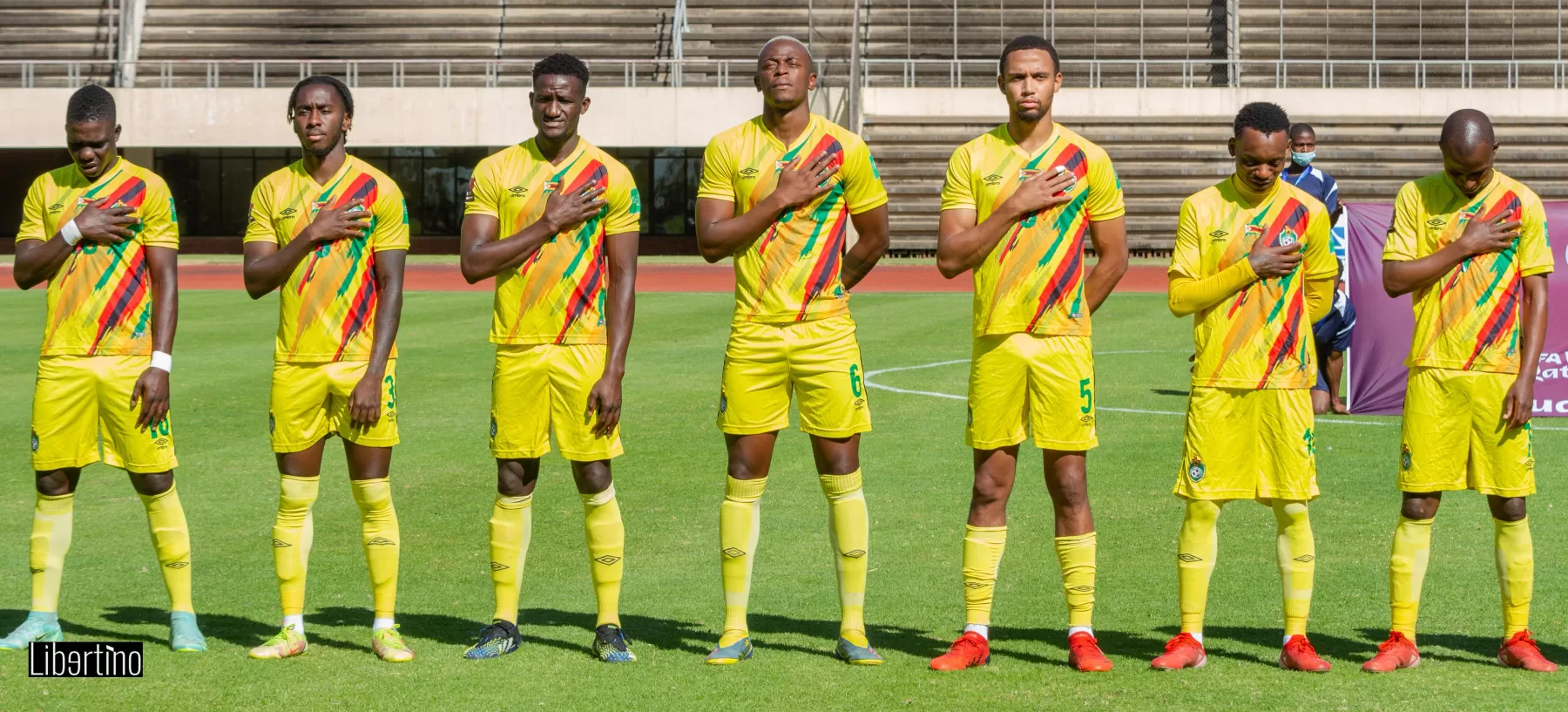
For a period spanning the late 1990s and early 2000s, there was a growing belief that Zimbabwe possessed the strongest group of footballers in its history.
The Warriors had talent throughout the squad, with Peter Ndlovu making headlines in England while several experienced internationals were helping raise expectations among supporters. Benjani Mwaruwari would later emerge as another player capable of making an impact in the Premier League, further strengthening the belief that Zimbabwean football was entering a new era.
At a time when relatively few players from Southern Africa were competing in Europe’s biggest leagues, Zimbabwe was producing footballers capable of holding their own at the highest level. Supporters had every reason to believe that major tournament qualification was no longer an impossible dream but a realistic target.
Despite producing several players capable of competing at the highest level, Zimbabwe’s so-called golden generation never qualified for the FIFA World Cup. More than two decades later, many supporters still wonder what might have been.
Peter Ndlovu Becomes a Trailblazer
No discussion of Zimbabwe’s golden generation can begin anywhere other than with Peter Ndlovu.
The striker became one of African football’s most recognisable figures during his time in England. After joining Coventry City in 1991, he developed into a fan favourite and established himself as one of the Premier League’s most exciting forwards.
Ndlovu’s success abroad helped put Zimbabwean football on the map, as young players suddenly had proof that a footballer from Zimbabwe could compete in one of the world’s toughest leagues and thrive under the spotlight.
His achievements also raised expectations for the national team, with supporters hoping a player of his quality could inspire Zimbabwe to reach major tournaments and compete regularly against Africa’s elite nations.
More importantly, he became a symbol of what was possible for future generations. Long before social media and global scouting networks became commonplace, Ndlovu was demonstrating that Zimbabwean footballers could build successful careers abroad and gain recognition on the international stage.
A Talented Supporting Cast
While Ndlovu often grabbed the headlines, he was far from alone as his brother, Adam Ndlovu, enjoyed a successful international career and became an important figure for the Warriors.
Players such as Agent Sawu, Memory Mucherahowa and Esrom Nyandoro also helped form the backbone of a side that was capable of troubling stronger opponents and competing with some of the continent’s most respected teams.
As the years passed, Benjani’s emergence only strengthened the belief that Zimbabwe’s best days were still ahead.
The striker enjoyed a successful Premier League career, representing clubs including Portsmouth and Manchester City. His success in England provided further evidence that Zimbabwe was producing footballers capable of performing at the highest level and succeeding in one of the most competitive leagues in world football.
The squad may not have possessed the depth enjoyed by some of Africa’s traditional powerhouses, but there was enough quality within the group to convince many supporters that a breakthrough was only a matter of time.
So Close, Yet So Far
Despite the individual talent available, Zimbabwe struggled to translate its promise into major tournament success.
The Warriors came close on several occasions and regularly produced performances that suggested a breakthrough was possible. Qualification campaigns often began with optimism, only for inconsistency and missed opportunities to prove costly when the decisive moments arrived.
Competing in African football has never been easy, particularly when nations such as Nigeria, Cameroon, Ivory Coast and South Africa possessed greater resources, deeper squads and stronger footballing infrastructures. Even so, many supporters felt Zimbabwe should have achieved more during this period.
There were matches that seemed to signal a turning point and campaigns that appeared to be building momentum, only for hopes to fade before qualification could be secured. The margins between success and failure in international football are often incredibly small, and Zimbabwe frequently found itself on the wrong side of those fine margins.
The frustration was never a lack of talent within the squad. That frustration came from the feeling that the generation never fully realised its potential despite possessing players capable of competing at a far higher level than many of their rivals.
More Than a Football Problem
Footballing factors alone do not tell the whole story because throughout this period Zimbabwean football faced numerous administrative and financial challenges that made long-term progress difficult.
Changes behind the scenes often created instability, while uncertainty away from the pitch frequently undermined attempts to build momentum and establish a clear direction for the national team.
Many African nations have faced similar obstacles, but successful national teams tend to combine talented players with strong organisation and effective planning. Zimbabwe frequently had one without the other.
As a result, the national team often found itself fighting battles both on and off the pitch as it attempted to bridge the gap between potential and achievement.
When supporters look back on that period, it is impossible to separate the performances on the field from the wider challenges facing Zimbabwean football at the time. Talent alone can only take a team so far, particularly when competitors are operating within stronger structures and benefiting from greater stability.
The Legacy They Left Behind
Although the golden generation never reached a World Cup, its influence can still be seen today. Players such as Marvelous Nakamba and Marshall Munetsi followed a path opened by those who came before them and continued Zimbabwe’s presence on the international stage.
The success of Peter Ndlovu and Benjani demonstrated that Zimbabwean footballers could thrive abroad and compete at the highest level, creating role models for younger players hoping to follow in their footsteps.
The current generation continues to chase the achievement that eluded their predecessors. Qualification for the World Cup remains one of the country’s biggest sporting ambitions, and the lessons of the past remain relevant as Zimbabwe continues its pursuit of football’s biggest stage. Modern supporters can now follow that journey in more ways than ever before, consuming everything from tactical analysis and football podcasts to guides covering matched betting and other aspects of today’s football culture.
A Story of What Might Have Been
Zimbabwe’s golden generation occupies a unique place in the country’s football history. It produced some of the finest players the nation has ever seen and gave supporters genuine reason to dream about what might be possible.
Yet when people look back on that era, they often remember not what was achieved but what almost happened. The memories remain bittersweet because the talent was clearly there and belief remained strong throughout the period, yet the World Cup dream always seemed to slip away when it mattered most.
For many football fans in Zimbabwe, that generation will always represent one of the great “what if” stories in African football. The players inspired a nation, produced moments of genuine excitement and helped raise the profile of Zimbabwean football across the continent, but the achievement that would have defined their legacy ultimately remained out of reach.
More than two decades later, the question remains the same. What might Zimbabwe’s golden generation have achieved if everything had fallen into place at the right moment?